01
Evaluation first
Before any imaging, the office goes through your history and examines how your neck actually moves. A DMX is only worth doing if it's likely to add something you don't already know.
Sicklerville, New Jersey
An X-ray, a CT, an MRI — each one captures a single moment that you hold on purpose, as still as you can manage.
If a joint travels further than it should, it does that while you are moving. Hold still and it settles back where it belongs — and the picture looks fine.
Up to thirty X-ray images every second, recorded while you turn, bend and look up. Not a photograph. A video.
of New Jersey
Digital Motion X-ray
What it is
A standard X-ray or MRI captures one position, held. A Digital Motion X-ray records continuously — up to thirty images per second — while you turn your head side to side, bend forward, and look up.
That difference matters for one specific reason. Some things only exist in motion. A joint that travels further than it should does so while it's moving; ask it to hold a position for a photograph and it returns to where it belongs. The photograph is accurate. It's just answering a different question.
The DMX is designed to capture the movement itself, so it can be played back and reviewed frame by frame.
A still scan
X-ray, CT and MRI are excellent at showing structure — fractures, discs, soft tissue, tumours. They capture a position you hold deliberately, usually lying down.
A motion study
A DMX records the whole range of motion as video, upright and weight-bearing. It is designed to show how the joints behave while they move.
What it looks like
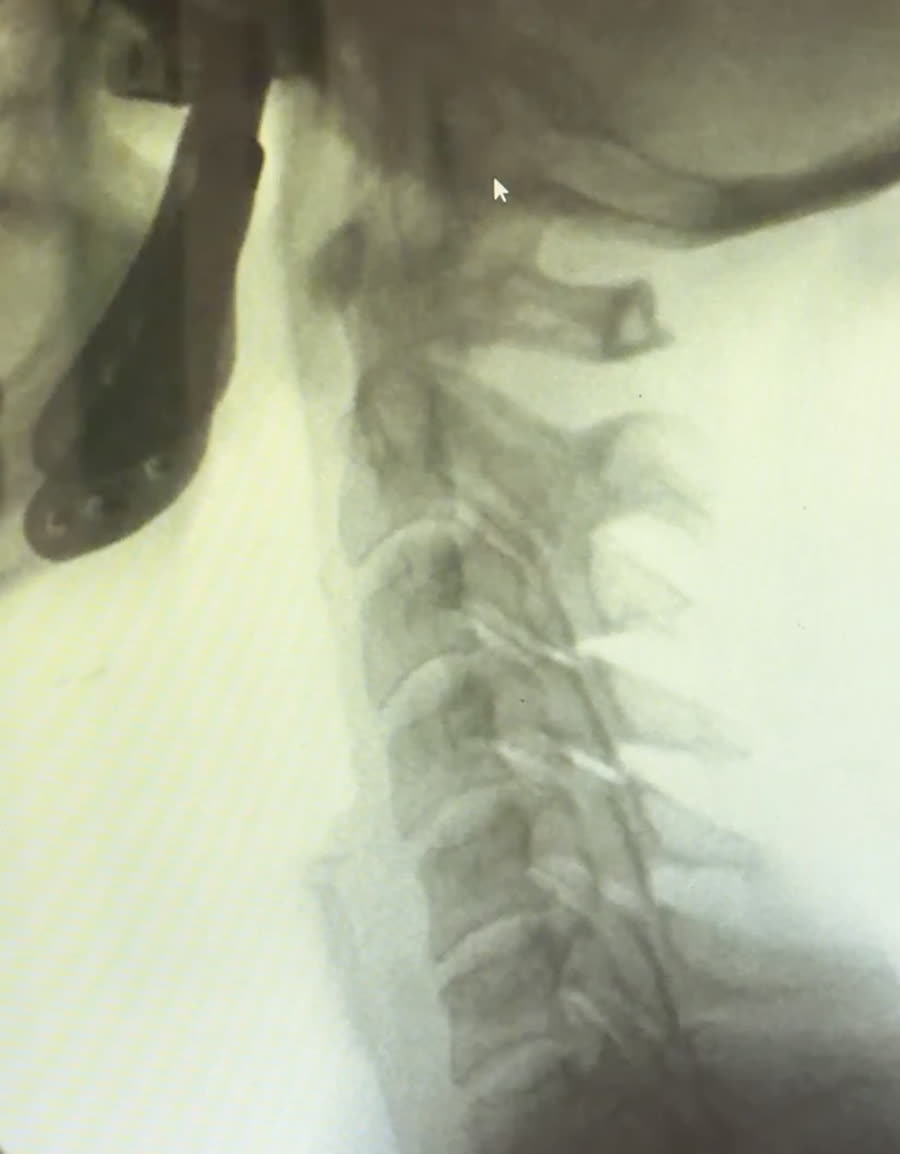
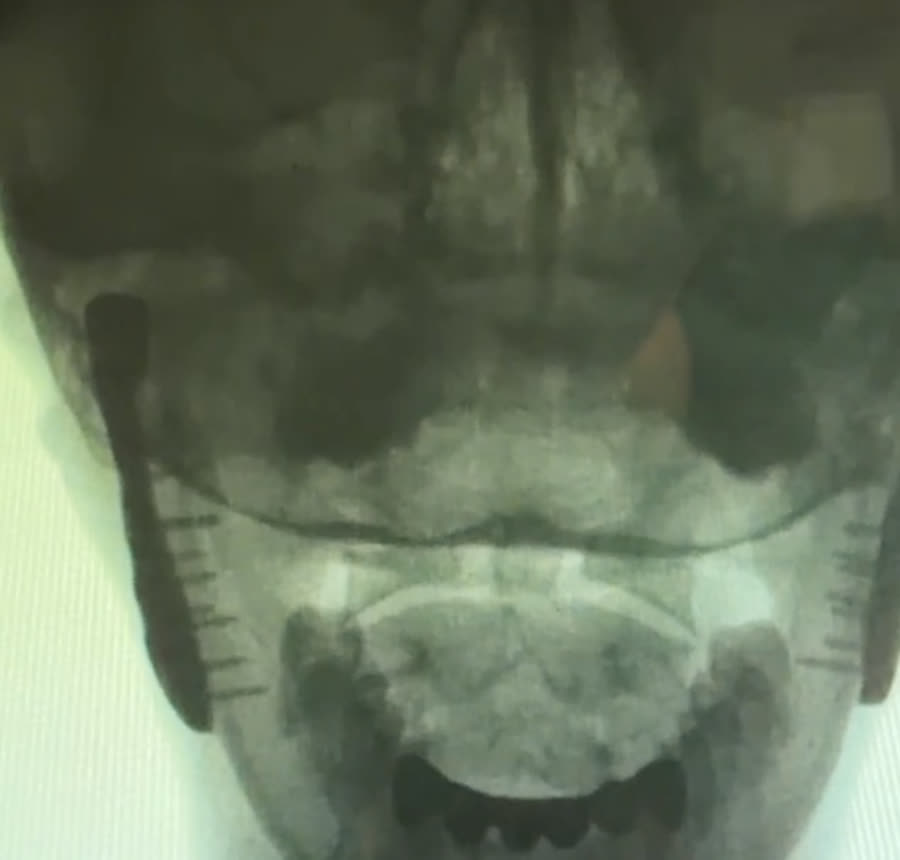
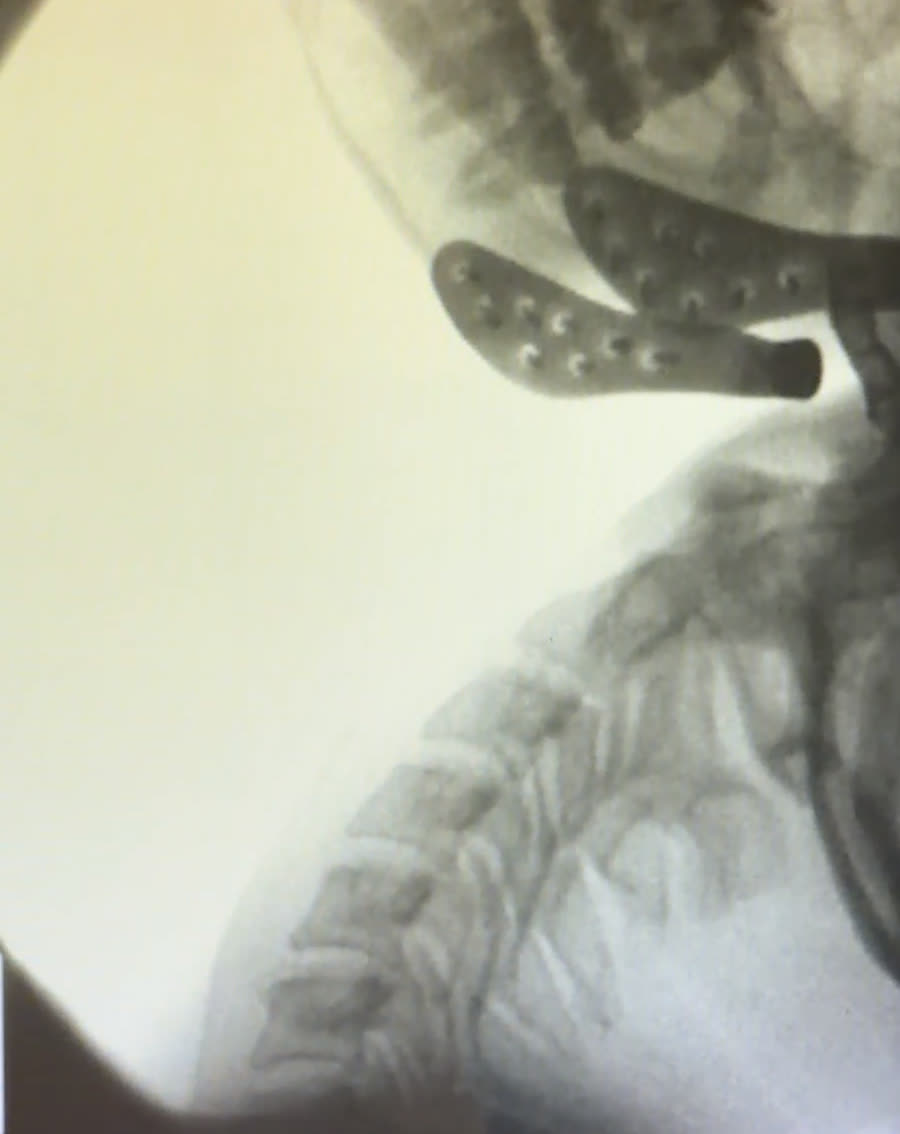
Real DMX studies performed at this office, shown with patient permission. Examples only — not a diagnosis, and not a claim about any individual result.
Who it's for
A Digital Motion X-ray is often considered for people dealing with:
Being scanned is not the same as being a candidate for treatment. An evaluation comes first, and not everyone who has a DMX here goes on to any particular care.
What happens
Before any imaging, the office goes through your history and examines how your neck actually moves. A DMX is only worth doing if it's likely to add something you don't already know.
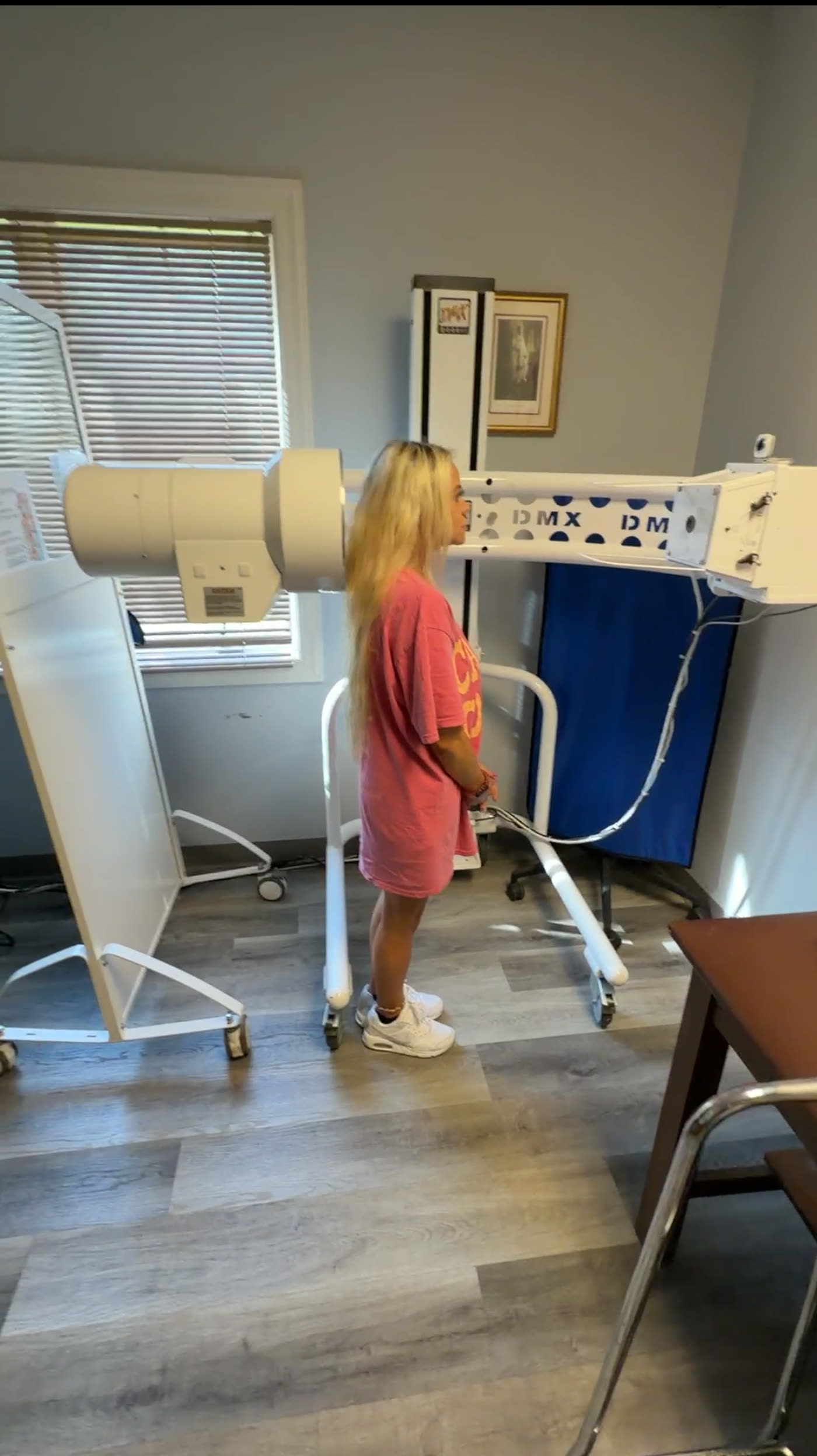
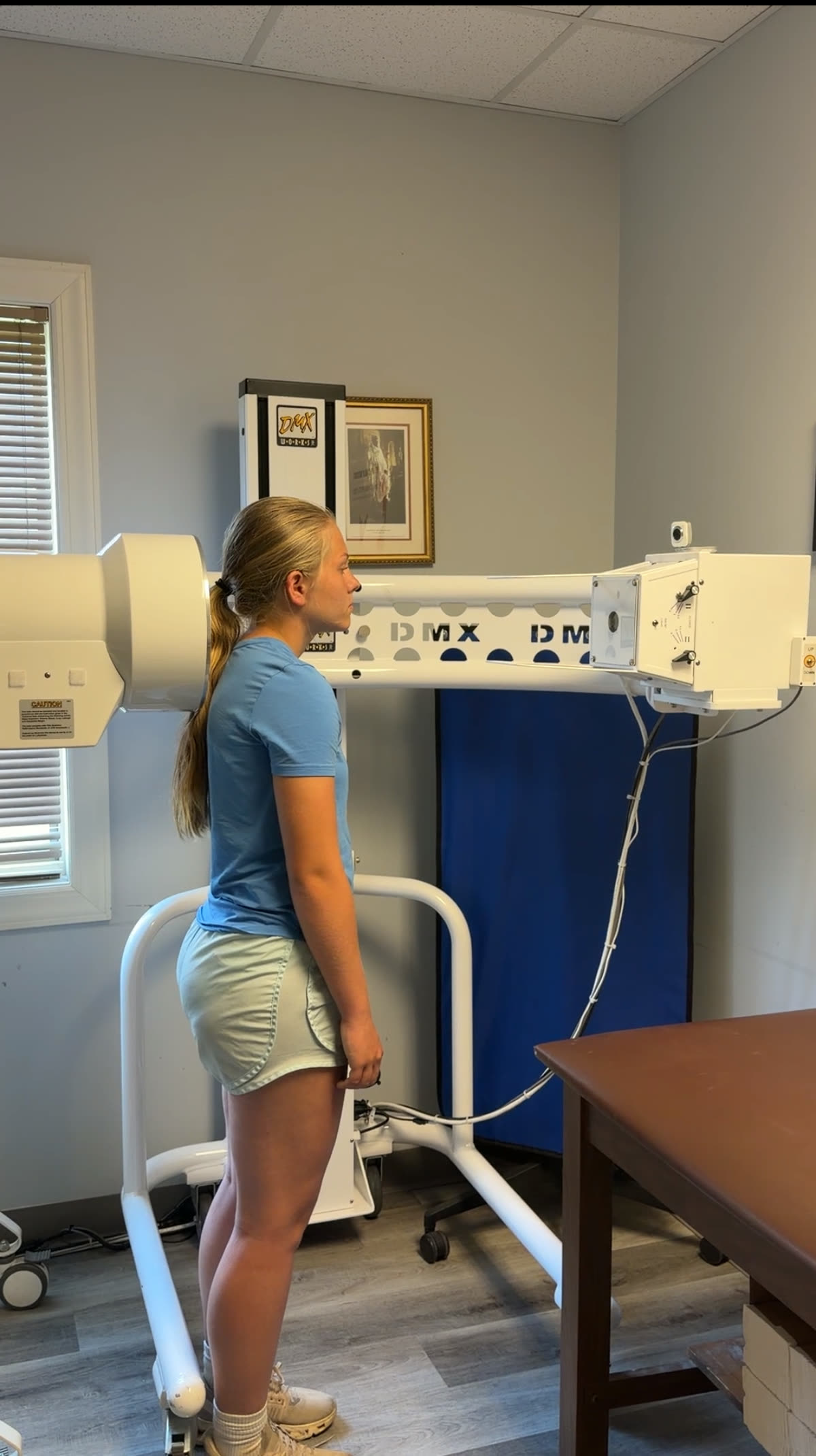
You stand upright between the two arms of the machine. Nothing touches you and the machine doesn't move — you do. You'll be asked to turn your head slowly side to side, bend forward, and look up, while the study records. It takes a few minutes.
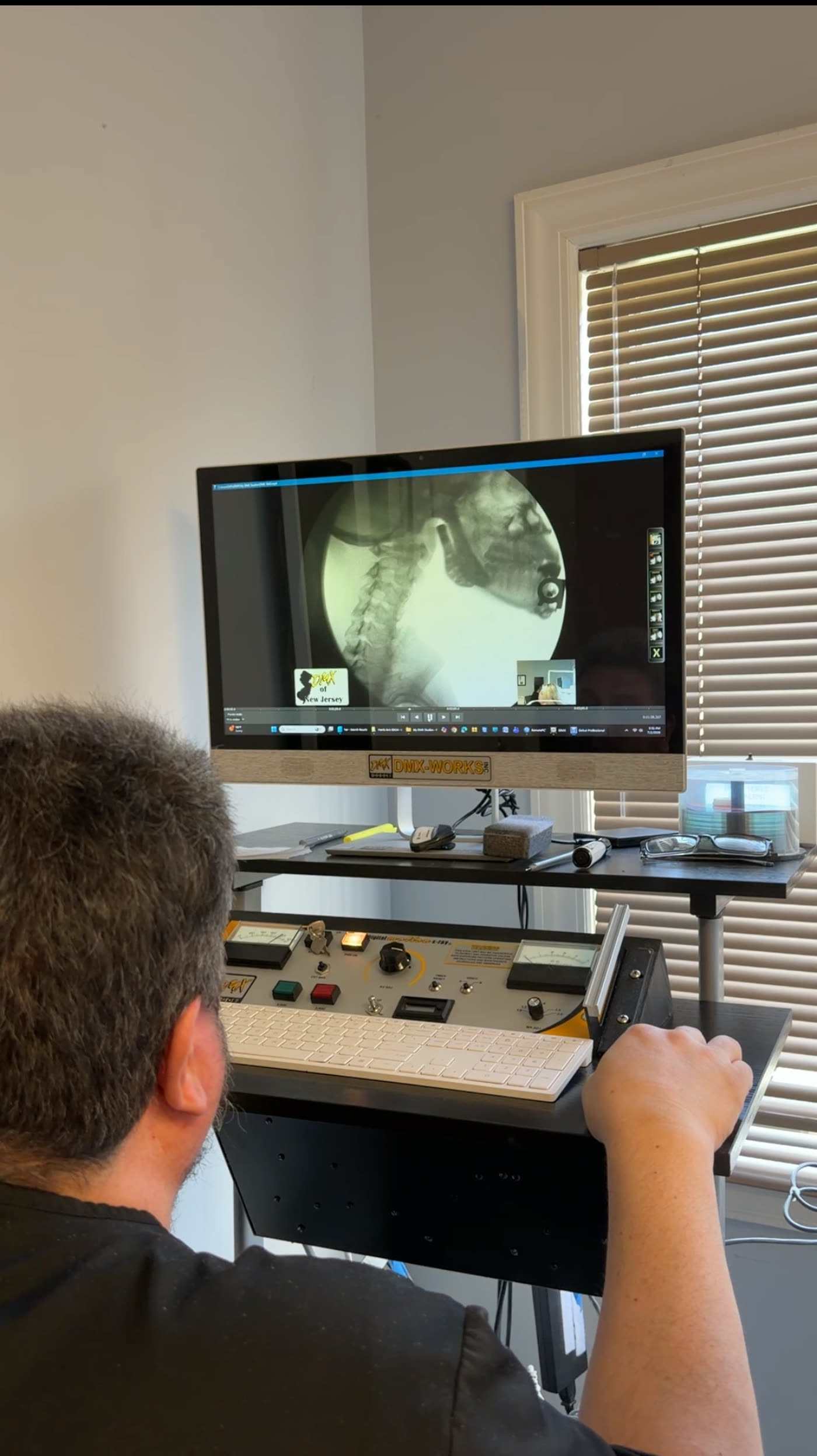
The study is reviewed as video, frame by frame — and you watch it too. You'll be walked through what's on the screen, what it shows, and just as importantly what it doesn't.
After the scan
A DMX is designed to answer a question — not to begin a treatment. What happens next depends entirely on what the study shows and what the evaluation found.
This office is also home to SWAVE, an acoustic-wave treatment. Some people who have a DMX here go on to be evaluated for it. Many don't. They are separate things, and the imaging comes first.
Call the office and ask about a Digital Motion X-ray. Someone will talk you through whether it makes sense for your situation.
(484) 335-3411
DMX of New Jersey
1100 Liberty Place, Sicklerville, NJ 08081
Get directions